Showing posts with label Work. Show all posts

Tuesday, July 12, 2011

Singapore is now the region's costliest place. =)

Forget Hong Kong, previously Asia's (outside Japan) costliest place.

Today, Singapore has officially overtook Hong Kong to be the region's costliest place to live. Tokyo remains the most expensive in the whole Asia, while Luanda in Angola - remains as the world's most expensive city. Other very costly places to stay in includes Osaka - which is ranked 6th in the world.

Singapore.

Sydney is becoming more expensive too, together with Melbourne. Both cities jumped many places to 14th and 21st respectively, while older cities such as London and New York dropped a bit.

Monday, July 4, 2011

The Advantages & Disadvantages of the Industrialized Building Systems (IBS).

Yesterday, my colleague asked me something on IBS; IBS has obviously been one of my favourite topics, and in fact, I have always been a believer in certain forms of IBS systems. I was the one who had 'pushed' for the introduction of system formwork usage in my office - since then, we used a lot of steel forms, table forms, the aluminium formwork system such as MIVAN, and most recently, the DOKA system.

The DOKA system formwork used at Menara Binjai.

Anyways, IBS is much more than just system formwork. I would say system formwork can only get 0.5 or 0.6 multiplier in terms of IBS scoring, cos it is still casted in-situ. In fact, The IBS is a system, or rather method of construction where the various components are constructed, and then assembled on site - similar like LEGO. =)

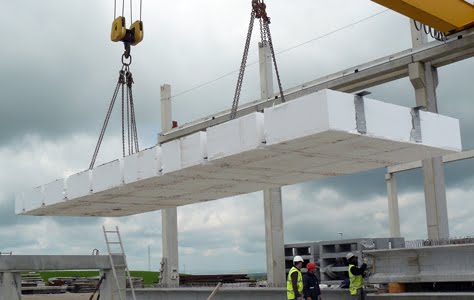
Precast elements plays a significant role in IBS.

In Malaysia, there are about 5 main IBS groups.
  • Pre-cast concrete frames, panels, columns etc
  • Formwork systems - tunnel forms, permanent steel formworks
  • Steel frame systems - portal frame, roof trusses
  • Prefabricated timber frames - i.e. for roof trusses
  • Block work systems - lightweight concrete blocks and so on...
My colleague got a little shock to see her newly purchased house - being built the un-conventional way - in the form of IBS. After explaining a bit to her on IBS systems, I have decided to come up with this post - to further explain on the advantages and... of course, disadvantages of IBS systems. Nothing is perfect in this world... so there are always pros and cons. =)

What would be the main advantages of the usage of Industrialized Building Systems?

The immediate advantage is... discounts on levy charges for contractors!!!!! Sorry - this is of course in the contractor's point of view - which would have plenty of advantages. But with due respect, it is the buyers/end users who need to worry about it - so here are some of the strong points.

Precast panels used in linked/terrace houses.

As most components are manufactured in the factory, the quality, or rather high quality can be consistent and maintained as the working environment in a factory is easier to control. The wall surfaces, the soffit surfaces and so on can be controlled right to the millimetres in dimensions, hence improved and consistent quality. Another good point for buyers is... IBS allows projects to be completed faster than conventional systems - due to the introduction of pre-fabricated components to replace on-site works. Assuming there is a massive amount of quantity - economies of scale-wise, IBS systems will result in cheaper total construction costs, and buyers can benefit if the savings are transferred to them.

We have the yin.. how about the yang?

In most cases, there is a high initial capital costs for the contractors - which might decide to transfer the costs to the buyers. Plus, with only a handful of IBS players in the country, there is quite a 'monopoly' system. Further to that, the standardization of building components and elements also results in a lack of aesthetics value - buildings tend to be very boxy and square-y, which may not look as impressive as the conventional curvy buildings. But this part here - IBS systems are being expanded to be more architecturally and eye-pleasing.

The Singapore's HDB flats - which uses a lot of IBS elements - looks pretty boxy to me.

Another major problem... is when the contractors have bad workmanship while using pre-fabricated panels. This can result in problems in the joints - resulting in water leakages. In a country like Malaysia where it rains practically everyday, the problem can be very severe. To counter this problem - one has to thoroughly check through the completed units during handover to make sure the developer sorts out these defects.

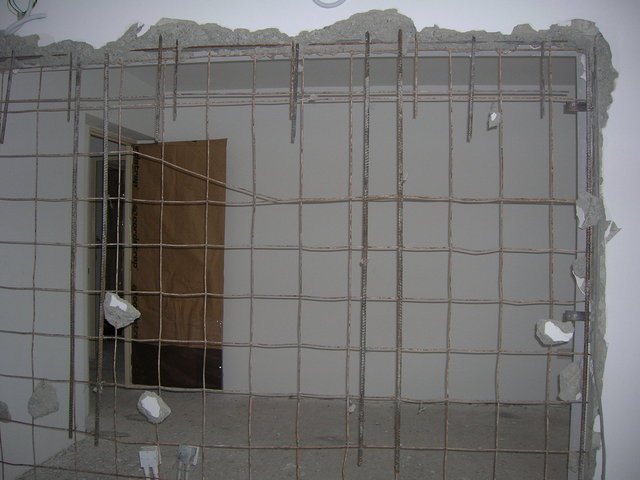
Owner tries to hack a precast wall - only to find steel reinforcements which he has a dilemma whether to cut or not to cut. Cutting it might result in affecting the structural integrity of the building.

Another disadvantage with pre-cast elements is that these components are considered to be inflexible, with respect to changes/renovations. Most people would want to drill holes for wall lamps and so on - which is okay. But for some, they want to hack to allow for additional conduit works and wiring works - which might be a hindrance. If one buys two adjoining units, they may have problems trying to hack down some walls to allow two units to breakthrough.

Sunday, July 3, 2011

The Intermark, Jalan Tun Razak - The Car Parks.

Just a random post on some car park pictures of The Intermark that I took recently.


Upgraded from the darker, more run-down condition. All in, pretty nice now, but the ramps are still pretty tight for larger cars. =)

Friday, July 1, 2011

The Residential Property Market and Sector.

Okay - what I am going to write about next might make you jump off your chair - or rather shocked - or some of you may already sense it already. =) I have been conducting a very thorough research on properties in Malaysia, the property markets - and for those who want to invest in property counters, yes, the property sector as well.

In my opinion, Malaysia's current residential markets look very good, and I would say that the likelihood of a residential property bubble bursting is very low. However, I do think that the larger developers would be seeing fair growth numbers for 2012 as compared to 2011. The rebound from 2008 saw a jump in 2009, a hike in 2010 and a pretty impressive 2011. But as the markets tend to hover and cool down a bit - I believe 2012 will still be a good year, just without the super impressive growth rates.

The Government - through the Economic Transformation Programme (ETP) has been releasing plenty of good news to the property markets. In a way, having new developments and so on are creating and increasing the supply numbers to cool down the high demands, on the other hand, the new developments also create an excitement amongst property players and investors.

I am a firm believer in properties in the Klang Valley region. I believe the Klang Valley properties will continue to be the main driver of the Malaysia property market - and I foresee the highest growth in terms of transaction values and capital appreciation for Klang Valley properties. As what I have seen in private developments and launches, I also noticed that in comparison to 2010 (in particularly 2nd half of 2010), housing launches have slightly slowed down. Assuming units are still being sold at the same rate, that would mean the numbers of unsold residential houses and units will continue to reduce, hence reducing the possibilities of the oversupply situation.

The MRT project under the ETP.

Some analysts and certain groups have said that the ETP projects - in particular with the Greater KL and the MRT will push the property sector further. In my opinion however, there are 2 schools of thought for this. The MRT is expected to be a RM35billion (or more) project, with multiple lines and stations. Yes - I would expect this to enhance/improve property values - however, in my opinion, implementation is always the key to success. In this case, a multi billion dollar project would take time to be implemented and constructed. The project will have its launch event next Friday - to be officiated by the PM himself.

On the Greater Kuala Lumpur part - I would say that there are plenty of good news to flow out from there. Smaller projects such as Damansara City, the redevelopment of Pudu Jail, the developments around Matrade and so on could be launched quite quickly, and actual physical works could hit the grounds as soon as early 2012. The larger projects such as the RRIM land in Sg Buloh, the Sg Besi RMAF land and the KLIFD project at Imbi side will take a much longer time for masterplan proposals, authority submissions and so on before any works can start - which I would look at about... earliest, 2nd half of 2012.

Nonetheless, I would think that the RM150k to RM500k properties are still seeing plenty of investors' attention - and would always remain within the radar. I have seen how properties in Desa ParkCity uptrend from the RM950k/unit to about RM1.2mil/unit - which is a good 26% upside. But I have also seen properties of the lower prices - go from the low RM350k to hit RM500k within the same period - which is an impressive 40+%! Hence, I believe that properties below RM500k are still very much in demand.


The Skim Rumah Pertamaku.

The Government introduced the 'Skim Rumah Pertamaku' - for 1st time home buyers to obtain 100% margin financing for homes below RM220,000. This clearly mean one thing - Affordable is the word, and very likely the word for 2012. To add on to this, the Government is also allowing those earning less than RM6k per month to obtain 90% loan margins with 10% guaranteed deposits for apartments between RM220k-RM300k. However, with the recent rise in building material prices and land costs, I would expect the developers to not focus so much on the RM220k and below units - and instead, on those above RM500k to have better margins.

Alam Idaman apartments, with units from RM240k-RM320k.

Conclusion
In general - while the residential markets look good overall, do be careful for the expensive properties. Properties at about RM200k will be a better bet, with plenty of potential upside. Those RM500k and above would always remain a fair/good bet, but easy disposal of the units will remain a question mark. Do note that the house affordability is very good, with very low interest rates and good options around the markets to scout. Banks are also experiencing better liquidity, and are giving out 30-40 year loan tenures to encourage property purchases.

Monday, June 27, 2011

Feng Shui: River Effect - and my comments. =)

On 17th of June 2011 - Master David Koh and Joe Choo wrote an article in The Star about the fengshui of Petaling Jaya's Section 19 - and in particular, the river that passes through Section 19. Without further ado... here's the article below - together with my comments in bold... some people have been asking me for my comments on this - and... just read on lah ok...

* * * * * * * * * * * * * * * * * * * * * * * * * * * * * * * * * * * * * * * *

This week, we come to the last segment of Petaling Jaya’s Section 19. As we observed these past few weeks, Section 19 tracks along the Penchala River from the Sprint Highway until the river reaches Section 14. The river passes through housing estates, condominium towers, a shopping mall and shops. (For Google map reference, log on to http://maps.google.co.uk/ and search for “Kuala Lumpur”.)

This leaves us with a small long stretch of land that lies on both sides of Jalan 19/1, plus another section bordered by Jalan 19/1B and 20/1. The buildings here are predominantly industrial lots. In recent years, some of them have been converted into office blocks, and a commercial centre called 3 Two Square.

Jalan 19/1 is often congested, thanks to haphazard parking along its sides and the presence of food stalls. These stalls provide a cheap source of food for factory workers and more often than not, a brief respite from the workplace in the form of “teh tarik”. The traffic situation is compounded by the large number of lorries and trucks transporting containers making their way in and out of the industrial lots. The loading bays are limited and these lorries often have to wait along the main road for their turn.

Yes I do agree. In fact, the authorities had commented that prior to the development of 3 Two Square, there were not much congestion as the roads were quite narrow. After the development of 3 Two Square - and the widening of the road by the Developer, lorries/trailers started to park along that section - causing unnecessary congestion.

In the evaluation of landform, we must first look for the mountains (or high land) and rivers. According to Environology principles, earth energy originates from the top of mountains and flows downhill until it reaches a valley. This is typically where rivers can be found – they are the natural gathering points for rainwater.

Steep gradient
A steep gradient would generate fast and powerful energy flow. It is not recommended to construct any property that faces this energy head-on: it can overwhelm the occupants and cause harm. Properties should be constructed to face downhill where a river is normally found. According to the sage Guo Pu, earth energy is stopped and deflected when it encounters a medium of different rigidity, such as water. Therefore, the energy can be conserved within the embracing curve of a river and dispersed by the “elbow” or convex of the river.

In ancient China, most of the population centres were located to the north of the Yangtze River. Hence, it was natural for houses to face south – they received the most sunlight and faced the river. Ancient sages knew this but the general populace typically took it at face value, believing that houses facing south have the best “Feng Shui”! Throughout our series of articles, we emphasised this point and used only the mountains and rivers as reference points. We presented case study after case study to verify this hypothesis and the evidence has so far been compelling.

The same can also be seen in our current location of interest. This segment of Section 19 has been around for a long time and the Environological effects of the landform can be seen very clearly.

Both sides of the river
On both sides of the Penchala River, there are rows of industrial or factory buildings. Some face Jalan Semangat to the north-east and the others face Jalan 19/1 to the south-west. None, to our knowledge, faces the river. This is not surprising as the river does not look attractive at all and is more like a giant monsoon drain to which effluents can be channelled. Caring for the environment was not a big thing then.

Given the landform, the best directions would be to either face the river or follow its flow direction. For buildings along Jalan Semangat, that would be south-west and south-east, respectively; for those along Jalan 19/1, it’s north-east and south-east.

Perhaps, from the feng shui point of view. But facing the river/drain - there would be no frontage to the main roads, isnt it?

But most of the buildings here do not have that orientation and are likely to suffer dire consequences over the long term. Indeed, many of the buildings here appear to be feeling its effects. With the exception of the new Quill 9 building, they look rundown. The most telling is the closure of the Handi-Mart outlet at the junction of Jalan Semangat and 14/29. When it first opened, there was a lot of fanfare and interest. Do-it-yourself classes and demonstrations were held and it was the handyman’s dream come true. Quill 9 is a new building and enjoys a fresh infusion of energy. Care must be taken though, to ensure that its orientation is correct and that the building is re-energised every six or nine years.

Majority of the buildings, except Quill 9 are pretty old already. And most of them are actually industries, or industrial-related buildings.

The situation with the other buildings along Jalan Semangat is can be improved. That is the good thing about factories – they are standalone buildings and the entrances can be shifted to any side, with some renovation. However, we hasten to add that the specific location of the entrances and personnel must be chosen carefully with the help of a qualified Environology consultant. It has to suit the businessman and the industry.

Same effect
On the opposite side of the river, the factories are likely to suffer the same situation for the same reasons. They need to face the river or follow its flow. This could explain why some of these companies appear to be struggling to gain (or regain) market share in their respective industries. UMW Toyota recently constructed a new showroom here, and it will likely do well if the main entrance is configured to face Jalan Dato Abdul Aziz.

As it is, UMW Toyota is already doing very well, with over 150 cars servicing there everyday. Having an entrance at Jalan Dato Abdul Aziz - bearing in mind its 'shorter' frontage might actually affect the business as a foreseeable congestion would be a high likelihood.

Buildings on the other side of Jalan 19/1, such as the Summit Company, Wisma Academy and a futsal centre have it better. They face the river. At the end of this road, we come to 3 Two Square, a new office, commercial and retail development.

Agree that Summit Company, Wisma Academy and the futsal centre are doing well. However, dont dismiss the performances of the Perodua, British American Tobacco as well as Vitagen - too!

This was built on a plot of land previously occupied by Cold Storage. The name is derived from the land plot number and is a homophone for “business” in Cantonese (sang yee). Shoplots and offices here are oriented in four directions of which three have high visibility from the road, a sellable proposition for real estate agents.

Yet, according to Environology principles, only those facing Jalan 19/1 and Dato Abdul Aziz are likely to do well because they face the river or parallel its flow, respectively. Shops along Jalan 20/7 have their backs to the river while the tower block faces high ground.

In my opinion, I would agree with it - but from the economics as well as from the marketing point of view. Most of the traffic, or outside traffic comes from Jalan Semangat - and ideally, the first shop they would see is Starbucks 3 Two Square - and whether they turn in or go straight, they would see the shops facing Jalan 19/1 or Jalan Dato Abdul Aziz first. =)

The units facings Jalan 20/7 may seem to be not doing that well. However, let me reiterate once again. 3 Two Square, when it was launched and sold back then, there were easily 30-40% of 'cash buyers' - whom I would rather say, were more geared towards capital appreciation, instead of yields or rentals. There are plenty of them who chose not to sell (unless at the prices they wanted), or even rent out.

If we were to track Jalan 19/1 from the “Rothmans Roundabout”, we will find the road curving south-east after passing the Penchala River. This creates an elbow against Wisma KT, Bangunan Takaful Ikhlas, Gapsoft, the Otomotif College and Forum.

Elbowed out
These buildings have excellent orientations relative to the highland and river. Their backs are high and they face the river’s flow. However, these positives are counteracted by the elbow of the road, which scatters the earth energy. Therefore, businesses here will experience a rollercoaster of ups and downs.

On the opposite side, the buildings enjoy the embrace of the road but have two negative factors – they face high land and go against the river’s flow. Hence, they will also endure ups and downs but generally are likely to fare worse. Jalan 19/1B services a few buildings including Wisma Kemajuan and a luxury car showroom. The terrain here tapers downhill from north-west to south-east. Therefore, properties on the north-west side of the road that face downhill are likely to do better than those on the opposite side.

Unfortunately, the luxury car showroom - used to be the distributor for Ferraris in Malaysia - and they have since lost the dealership to NAZA.

* * * * * * * * * * * * * * * * * * * * * * * * * * * * * * * * * * * * * * * *

Thursday, June 16, 2011

Shopping Centres in Kuala Lumpur / Klang Valley.

Some people were asking me where are the best places to shop in Kuala Lumpur - I had to explain one by one on the different shopping centres and so on... hence, I have decided to put this up - a blog on 10 Prominent Shopping Centres in Kuala Lumpur / Klang Valley. =)

Suria KLCC.

Suria KLCC is Malaysia's premier shopping centre located at the base of the Petronas Twin Towers in Kuala Lumpur City Centre based in Kuala Lumpur. It houses mostly luxury and fashionable shops such as Aigner, Louis Vuitton, Moschino, Prada, Brioni, Marc Jacobs, Hermes, Salvatore Ferragamo, Frank Muller, Bally, Coach, Hugo Boss, Karen Millen, Paul Smith, Fendi, Piaget, Miu Miu, Calvin Klein, Stuart Weitzman, Gucci, Chopard, Versace, Emilio Pucci, Burberry, Chanel, Tod's, Giorgio Armani, Emporio Armani, Ermenegildo Zegna, Rolex, Alfred Dunhill, DKNY, Jimmy Choo as well as cafes, restaurants, a 12 screen cinema, a concert hall, an art gallery, and a Science Discovery Centre, over 6 floors.

Pavilion

Pavilion Kuala Lumpur is a shopping mall situated along the Bukit Bintang district in Kuala Lumpur, Malaysia. Opened on 20 September 2007, it consists of four major components; a retail mall, an office tower, two residential and a proposed hotel. Pavilion Kuala Lumpur contains over 450 retail shops that are spread across seven levels. There are a number of double-storey flagship stores, of which some are street-front fashion boutiques which constitute the shopping mall, such as Burberry, Esprit (occupies four floors), Gucci, Hermès, Hugo Boss, Aigner, Juicy Couture, Prada, Versace, Salvatore Ferragamo, Ermenegildo Zegna and others.

Mid Valley MegaMall

Mid Valley Megamall is a complex comprising a shopping mall, an office tower block, 30 signature offices and 2 hotels located near Bangsar area. It has about 430 shops on five and a half floors. It has five anchor tenants; Carrefour, Jusco, Golden Screen Cinemas, Metrojaya and Harvey Norman. It also houses an 18 screen Cinema. Then there is a state-of-the-art bowling centre, a One-Stop IT Centre, two mega food courts and also a mega bookstore called MPH.

Gardens Mid Valley

The Gardens (also known in full as The Gardens at Mid Valley City) is the second phase of Mid Valley City, which also houses the Mid Valley Megamall. High end stores are located in the Retail Gallery. Anchor tenants include Robinson and Isetan. Louis Vuitton, Coach, Kate Spade, Ted Baker, Karen Millen and Hugo Boss are among the tenants of this upmarket mall. Other brands include Club Monaco, Lacoste, Nine West, Banana Republic, Esprit, Aldo, Armani Exchange, Massimo Dutti, Gap, Guess, Miss Sixty, and BCBG Maxazria.

Starhill Gallery

Starhill Gallery is an upscale, luxury retail mall located on Kuala Lumpur's famed Bukit Bintang district. It features more than a hundred renowned luxury timepiece and jewellery brands and dozens of other contemporary luxury labels. Some of its more notable brands here include Armand Nicolet, Audemars Piguet, Bedat & Co, Blu, Bvlgari, Cortina Watch, Davidoff, Hublot, Jaeger-LeCoultre, Khronos-Unique Horlogerie, Korloff, Kwanpen, M Missoni, Maurice Lacroix, McQ by Alexander McQueen, Richard Mille, Roger Dubuis, Steinway Lyngdorf, Tag Heuer, The British Master, Ulysse Nardin & Reuge and Vertu.

Lot 10

Lot 10 is a shopping complex within central Kuala Lumpur's shopping and entertainment district, Bintang Walk. It serves the wealthy and it is the equivalent of other city's high-class shopping such as Fifth Avenue or Knightsbridge in the 1990s. The outlets are mixtures of high end and middle level products such as Timberland, Ed Hardy, Topshop, Nike, Esprit, and G2000. Other notable brands include Vincci and Tangoo.

Fahrenheit 88

Fahrenheit 88 is a shopping mall located in the Bukit Bintang shopping district. Fahrenheit 88 have 280 retail shops. The tenant mix includes fashion and tech gadgets, and food and beverage outlets, targeting the young and trendy urbanites. The anchor tenant for food and beverage is Celsius KL which is located on the lower ground floor (LG2-01) and is now open for business. Other tenants include Uniqlo, Pacific Coffee Company, QuikSilver and Afternoon.

Berjaya Times Square

Berjaya Times Square Kuala Lumpur is a twin tower complex containing a shopping centre and five star hotel. Currently, it has space for more than 1,000 retail shops, 1,200 luxury service suites, 65 food outlets to suit many tastes and entertainment attractions such as Asia's largest indoor theme park, Berjaya Times Square Theme Park (formerly Cosmo’s World Theme Park) and Malaysia's first-ever GSC MAXX (formerly IMAX) 2D & 3D theatre which is located on the 10th Floor. Berjaya Times Square Kuala Lumpur is currently the 5th largest building in the world by floor area (7.5 million square feet, or 700,000 square metres).

Sungei Wang Plaza

Sungei Wang Plaza is a popular shopping centre situated in the Bukit Bintang area of Kuala Lumpur. The mall is well known for gathering a variety of products under one roof, including clothes, soft toys, games, watches, bookstore, lifestyle items and entertainment. The sixth floor of the mall has been established as T-zone (aka. Trendy Zone on The Roof), which generally caters for teenager fashion clothes, shoes and other trinkets. A lot of local designer clothes and accessories can be found with affordable price.

Low Yat Plaza

Low Yat Plaza is an established commercial shopping centre specializing in electronics and IT products. The shopping centre offers a great variety of single products with its collection of inter-chained stores. This is in contrast with streamlined arrangements in other electronics malls. Therefore, Low Yat Plaza allows the consumer to have greater buying power and freedom in selecting the products or electronic parts they wish to purchase. Most parts that are sold here are bargainable and many stores also offer their services to assemble the parts a customer purchases.

There you go - the shopping centres. Next up - I shall blog about some street shopping. =)

Wednesday, June 15, 2011

Investing in Commodities.

A commodity is a good for which there is demand, but which is supplied without qualitative differentiation across a market. A commodity has full or partial fungibility; that is, the market treats it as equivalent or nearly so no matter who produces it. Examples are petroleum and copper. The price of copper is universal, and fluctuates daily based on global supply and demand.

Commodity markets are markets where raw or primary products are exchanged. These raw commodities are traded on regulated commodities exchanges, in which they are bought and sold in standardized contracts.

In general, based on my studies and observations, major commodities have experienced a very good bull run in 2010, and even up til now. A lot of people are asking... is there going to be a correction soon for commodities? Is there a bubble growing?

I believe that commodities, are just like any other form of asset investments, which is ultimately driven by supply and demand. Commodities - cover a wide range of items and products, including the precious metals such as copper, gold, silver etc, cocoa, corn, wheat, sugar, lumber, and even cattle - of course, lets not forget CRUDE OIL. =)

The recent focus on biofuels have resulted in a strong and steady demand for crops such as corn - yes, the jagung, or palm oil and so on - these are a good source or raw material for biofuels. If you look at crude oil, it is hovering just below USD100 per barrel currently, and I believe that the price will continue to steadily move up in 2011.


Further increase in commodities' prices are also driven by economic growth. Lets not talk about our own ETP and so on - lets just look at China. China's economy is facing such a tremendous boom that their internal supply may not be enough to cater to their internal demands, hence affecting the world commodity prices.


In my opinion, commodites are a good hedge against major risks - buy GOLD, somehow one can never go wrong with gold. Other commodities are also in favour; with the current unrest in some Middle Eastern countries, I would expect oil prices to continue to rise in the coming months. Big changes in weather around the world, in particular China and various parts of Europe (floods and draughts) would be boosting agricultural commodities prices.

Just remember this - while equities are very volatile, commodities would be a safe bet. =P

Tuesday, June 14, 2011

Daewoo to Build St Regis Hotel, KL Sentral!

Daewoo Engineering & Construction Co, South Korea's fourth-largest builder won a US$190 million (RM575.7 million) deal to build a luxury hotel in Kuala Lumpur, South Korea's Yonhap news agency reported on Tuesday. The deal was signed with One IFC Residence Sdn Bhd, a joint venture between property developer Malaysian Resources Corp Bhd and financial firm CMY Capital Sdn Bhd. In a statement, Daewoo Engineering said that the company will take 48 months to complete the 48-storey hotel.

Tuesday, June 7, 2011

Planning your Property Purchase. =P

Before you jump into buying a property, there are many many many things to consider... and mind you, I would try to summarize here and there, but the many different things to consider... is beyond just the mortgage loans, downpayments and property prices, and of course, the property itself.

Properties in KLCC.

Before making a purchase, do calculate the total expense of the acquisition. This would include stamp duties, mortgage and loan charges, solicitors'/lawyers' fees, maybe insurance and so on. There will be many banks willing to lend you money - so do scout around for the best deal, and select the deals/packages with the appropriate payment amounts and methods.

Traffic congestion in Puchong.

I would always encourage my friends who come to me for advice to scout the local surroundings. Places with convenient transportation and community facilities tend to be able to fetch better rentals - so that is some important things to take note. If you could, you could also go to the local council/municipality to check on various new proposals that may affect the property - OR... for some insider information, maybe you could ask me. =) ...and to check on the prices, I would always encourage personal research and reading. Do check the local area for the recently transacted prices to get the best gauge of its market values to ensure that you are not buying an overpriced property.

Mont Kiara properties.

What else do you need to consider? Do take note of the management fees and so on - and see what it covers. Maintenance fees today can range from the RM0.10psf right up to RM0.50psf, depending on the facilities provided, and depending on location.

Monday, May 30, 2011

Property Investments Explained. =)

A few days back, I wrote a little blog post on The Biggest Mistakes People Make When Investing in Properties. I tried to explain the whole situation in kinda... layman terms, and then I decided to relate different property segments to different food joints. =) Since that post, I have received numerous questions and queries for advice with regards to property investments - I hope I am able to answer and reply to each and every one of you... but do bear with me in case I havent, and pls do remind me to answer you. =P

Today's blog post... is titled rather simple - Property Investments Explained. =) To keep it in the similar manner as the other day's post - I shall use food to relate.

Here's a little recap...
  • The Chinese kopitiams that serves the regular chicken rice and char kuey teow - and generally RM6-8 per meal - is similar to properties in the range from RM300,000 downwards
  • The bak kut teh joints, with meals from RM20+ per person, relates to properties in the range from RM500,000-RM700,000
  • The restaurants like Oriental Pavilion or Ah Yat, meals ranging from RM40+, relates to properties from RM700,000 to just above RM1mil. =)
I had mentioned that the bak kut teh type of properties are amongst the safest, as it caters to the mid range market, and becomes the bridge between the cheaper and the more expensive, ideal for upgraders as well as the downgraders.

Let me expand further from here...

La Fite, Shangri-la Hotel. =)

Some had asked... what about the properties that are like... RM3million and above? I would say... these properties are like the La Fite type of cuisine, fine dining, and expensive as well. It is the type that not everyone can afford, and mostly for the super rich only. But do note this - while it is expensive, it does give the top quality food and dishes, with all the upper segments of the society frequenting places like this.

A property in the La Fite range would be something like One KLCC. =) It is considerably expensive, priced for the upper segments of the market - but it does give the best quality finishes, and plenty of additional facilities such as having an individual swimming pool for every unit. Another point to note is that... it is located next to KLCC, hence the enhanced value.

One KLCC.

With the sudden surge in property launches recently, consumers and investors are able to explore and consider a lot more investment opportunities. However, I would advise the investors to take reasonable amounts of precaution before jumping to make a decision. For instance, when you are looking for location for lunch... you have plenty of choice to look at.

Would you go for the RM5 chicken rice? Or the slight premium RM6 char siew rice? Or maybe the RM20 bak kut teh? Or sometimes... you would go for fast food, which probably cost about RM10-12 per meal. There are so many different fast food joints in our country - and it would always have some kind of a bargain deal... (okay, lets not mention names here...)

These fast food joints... what do they give you in their bargain deal? Sometimes a free drink, sometimes a buy one get one free deal, sometimes they throw in some toys as well, a special lunch deal at a special price and many more... But sometimes, as the prices go lower, the burger sizes do become smaller too. According to Wikipedia, fast food chains have come under tremendous criticism over concerns ranging from claimed negative health effects, obesity, alleged animal cruelty, as well as claims of cultural degradation via shifts in people's eating patterns away from traditional foods. In my opinion, some of these allegations could be true, but some could purely be just speculations and rumours only.

You might ask... how does this relate to property?

Apart from the usual chicken rice and bak kut teh type of properties, there are the ones which I would call... the fast food joints type of properties. These properties launch with various packages and deals to tempt the market into investing in them. They come up with plenty of great bargains - such as interest-free during construction, guaranteed buy-back, guaranteed lease-back, guaranteed yields, low downpayment and so much more...

But... like the controversy about fast foods - the fast food properties also have its fair share of irregularities or controversies. In most cases, all the interest-free, guaranteed buy backs, yields and so on are already priced in the selling price. Hence, investors are attracted to take up units thinking that they had received a super good deal - but in fact, they are merely paying for it over the loan period.

And regarding sizes... you will be surprised that there are some developers out there who are developing properties... of similar price quantums, but at smaller sizes. In the past, you could purchase a 1,200 sf unit for RM360,000. Today, the unit prices remain at similar levels, but units can go down to as small as 400 sf!

S P Setia's Setia Sky Residences.

In my honest opinion, not all the developers who give these type of packages are bad. There are plenty of good ones out there. I like S P Setia's 5/95 packages which allows for no interest repayment during the construction period. Under the package, buyers need to only make a downpayment of 5% - and the balance is payable upon completion of the property. In the past, the 10:90 variant of the build-then-sell system, buyers had to make a downpayment of 10% of the property costs. S P Setia had also committed various other entry costs such as legal fees, stamp duty on the SPA and loan agreements as well as the memorandum of transfer for purchases under the campaign.

I believe this package had worked very well for S P Setia - and we are definitely seeing them as the main trend setters as there are plenty other developers who are giving out similar deals.

Monday, May 23, 2011

The Biggest Errors People Make When Investing in Properties.

I read this article on The Star Property by Michael Tan - on the Three biggest errors people make when investing in properties. He spoke about whether the property was for keeping, or to sell... and then not understanding the mindset of the locals, as well as not getting to know the area well. I somewhat agree with what he said - and I would have some extra points to add on as well.

Condominiums in Penang.

If you ask me - understanding the locals would be amongst the toughest criteria to cover. It is tough to know what the local mindset is; but then again, sometimes the majority of the community can be quite predictable as most of us all are trend followers, arent we? LOL.

If you compare properties with food joints... the lower end properties are like your Chinese kopitiams, where you have your chicken rice, char kuey teow and so on for like RM6-8 and below. The higher end properties are like going to a proper restaurant like Oriental Pavilion or Ah Yat etc, and your meals are averagely RM40++ per person. The medium end... to me, are likened to bak kut teh joints, whereby your meals range from RM20+ per person.


Say you're in the financial district of the city... i.e. KLCC area, or Jalan Raja Chulan for instance. On a bad day for the stock market, the high rollers go for a slightly cheaper meal at the bak kut teh joints, and the bak kut teh goers go to the kopitiams. On a good day, the kopitiam goers upgrade and end up at the bak kut teh shops, whereas the bak kut teh goers end up going for their abalones and shark fin's soup elsewhere. This is the same with properties. In my opinion, if you are going for the medium-end properties, which ranges from RM500k-RM700k, your investment is pretty safe, and there would be plenty of upgraders as well as downgraders - the in-between, the bridge...

SO... the next question is... to keep or to flip?

Like what Mr Michael said, properties for flipping are usually the ones with has the highest capital appreciation in the shortest amount of time. These are usually the landed properties. A simple formula to calculate capital returns would look like this...
The returns will be the total returns you would get. Assuming you achieved 30% returns in 3 years, the next thing you need to do is to divide that to determine your simple returns per year (as compared to compounded returns)

Properties for keeping are the ones that fetch rental returns higher than 6%. These are usually high-rise in nature. Here’s the formula for rental returns...
It is the main criteria to look into before you decide what strategy to adopt before deciding what type of property to invest into. Also, it’s crucial to estimate the returns of investment you desire and the timeline of which to exit. Having exit strategies prior to starting is critical to your success.

Once again, the question comes back to the same item. Rental Returns.

I had mentioned this before - and once again, my stand remains. It has come to my attention that a lot of properties in Klang Valley are not fetching yields of 8% like how they were previously. Here's my reply to that... YOU ARE RIGHT! If you could get a property that fetches you a 8% yield, by all means, dont ever sell it - at least not yet.

Based on the recent research and feedback from various agents, it seems like a lot of properties in Mont Kiara and KL area are fetching yields of 5-6%, which in my honest opinion, is very good.

TTDI Plaza.

Today, Malaysian banks are offering between 2.6% up to about 3% in interest rate returns for Fixed Deposits, a far difference from the 5-6% years ago - which had prompted property returns to about 8%. Today, at 3%, I believe that the proper adjusted property yields should hover at 4-5%. I believe that a lot of people may not agree with me - but I believe this is the scenario that we are facing now in Kuala Lumpur.

If you are hoping for capital gains, then expect your rental returns/yields to drop. =P

Centrestage, a new development in Section 13, PJ.

Thursday, May 19, 2011

Who said the Property markets were sluggish?

Whoever said the Malaysian Property markets were being sluggish are obviously not updated with the property news and updates. Let me bring your attention to a recent property launch in Sungai Buloh area last month... of which, a very prominent developer sold out all its units during the launch. =)

MAH Sing Group Bhd registered sales of RM242.5mil during the launch of Phase 1 and 2 of Star Avenue@D’Sara in Sungai Buloh recently. The launch attracted more than 800 prospective buyers and all 92 units of the three-storey shop offices, priced at an average of RM2.6mil, were snapped up.

The Avenue Street Mall offers 370,000 sq ft of nett lettable area spread over four levels, and the Mah Sing Group intends to retain approximately 60% to ensure the right tenancy mix to maximise rental yields and increase capital appreciation. The proposed tenancy mix includes F&B outlets, a supermarket, IT and telecommunications centre, bowling alley and fashion and accessories stores. With an estimated catchment of 360,000 people within a 15-minute drive and more than 300,000 commuters passing by daily Star Avenue@D’Sara is poised to be a shopping hotspot. Ample parking space is available with more than 1,500 bays on the ground floor and basement level allocated to cater to the expected influx of shoppers.

The project is also only three minutes from the proposed MRT Station in Taman Industri Sg Buluh and strategically located at the busy traffic junction of Jalan Sungai Buloh (Guthrie Corridor), Persiaran Cakerawala and Jalan Lapangan Terbang Subang. Star Avenue@D’Sara will also be able to bank on the 13,000 students at the proposed new Help University Collegue-Subang 2 Campus, via Persiaran Cakerawala which is currently being upgraded into a six-lane road. This project is also adjacent to the much talked about 3,300-acre Rubber Research Institute of Malaysia (RRIM) privatisation project to be developed by EPF.

Friday, May 13, 2011

Banks increase the interest rates.- and how will it affect you.

Bank Negara Malaysia - our country's central bank.

More banks have announced a revision upwards of their interest rates following Bank Negara's hike of the benchmark overnight policy rate by 25 basis points to 3% last Thursday.

Hong Leong Bank Bhd, Hong Leong Islamic Bank Bhd, EON Bank Bhd and EONCap Islamic Bank Bhd said their respective base lending rate (BLR) and base financing rate (BFR) would respectively be raised by 30 basis points to 6.60% from 6.30%.

The AmBank group said in a press release that BLR, BFR and deposit rates would be revised effective from today. “The BLR for AmBank (M) Bhd will increase by 30 basis points to 6.60% per annum. The BFR for AmIslamic Bank Bhd will increase by 30 basis points to 6.60% per annum,” it said.

For deposit rates, 1-month and 3-month tenure has been revised to 3% from 2.75%, the 6-month tenure to 3.25% from 2.90% and the 12-month tenure to 3.30% from 3.10%. Standard Chartered Bank Malaysia Bhd and Standard Chartered Saadiq Bhd said in an emailed statement that their BLR and BFR has been respectively revised to 6.60%.

So, how does these OPR rate changes affect your home loans???

So - with the OPR rates being increased, some of the banks - such as CIMB, have already increased their BLR rates from 5.80% to 6.05%. Of course - with the increase in BLR rates, housing loans will be more expensive. By some of you may wonder - by how much?

Using my housing loan calculator - I have come up with the following:-

For every RM100,000 loan that you take over 25 years - your repayment amount monthly increases about RM45 for every 1 percent increase in the BLR. Over 25 years, that is about RM13,500 extra compared to what you had to pay back originally. This figure makes it very substantial if you are taking a larger loan - such as RM1million for instance - there is an extra RM450 every month, and a total of RM135,000 over 25 years.

Ex.
Total loan amount = RM 100,000 to be repaid over 25 years.

Previous interest amount = x %

Monthly repayment = RM 550 (assuming a 4.5% - BLR - 1.3%)


Current interest amount = x + 0.25 %

Monthly repayment = RM 575.

Difference in repayment monthly = RM 25.

However, in my opinion, one should not worry about these rate hikes so much. You pay an extra 13.5% of your principal amount over 25 years - all in, adding that to the original interest repayment (assuming 4.5% - you have incurred RM80k in interests), I'm quite certain that your property would appreciate more than 80% over the 25 years.

So, there should be nothing stopping you from going out to buy a property right now despite the rate hike. If you are in for the long run, you know that you wont be making the wrong decision.