Showing posts with label Property Outlook 2011. Show all posts

Monday, July 4, 2011

The Advantages & Disadvantages of the Industrialized Building Systems (IBS).

Yesterday, my colleague asked me something on IBS; IBS has obviously been one of my favourite topics, and in fact, I have always been a believer in certain forms of IBS systems. I was the one who had 'pushed' for the introduction of system formwork usage in my office - since then, we used a lot of steel forms, table forms, the aluminium formwork system such as MIVAN, and most recently, the DOKA system.

The DOKA system formwork used at Menara Binjai.

Anyways, IBS is much more than just system formwork. I would say system formwork can only get 0.5 or 0.6 multiplier in terms of IBS scoring, cos it is still casted in-situ. In fact, The IBS is a system, or rather method of construction where the various components are constructed, and then assembled on site - similar like LEGO. =)
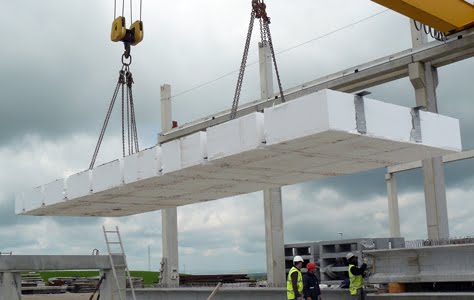
Precast elements plays a significant role in IBS.

In Malaysia, there are about 5 main IBS groups.
  • Pre-cast concrete frames, panels, columns etc
  • Formwork systems - tunnel forms, permanent steel formworks
  • Steel frame systems - portal frame, roof trusses
  • Prefabricated timber frames - i.e. for roof trusses
  • Block work systems - lightweight concrete blocks and so on...
My colleague got a little shock to see her newly purchased house - being built the un-conventional way - in the form of IBS. After explaining a bit to her on IBS systems, I have decided to come up with this post - to further explain on the advantages and... of course, disadvantages of IBS systems. Nothing is perfect in this world... so there are always pros and cons. =)

What would be the main advantages of the usage of Industrialized Building Systems?

The immediate advantage is... discounts on levy charges for contractors!!!!! Sorry - this is of course in the contractor's point of view - which would have plenty of advantages. But with due respect, it is the buyers/end users who need to worry about it - so here are some of the strong points.

Precast panels used in linked/terrace houses.

As most components are manufactured in the factory, the quality, or rather high quality can be consistent and maintained as the working environment in a factory is easier to control. The wall surfaces, the soffit surfaces and so on can be controlled right to the millimetres in dimensions, hence improved and consistent quality. Another good point for buyers is... IBS allows projects to be completed faster than conventional systems - due to the introduction of pre-fabricated components to replace on-site works. Assuming there is a massive amount of quantity - economies of scale-wise, IBS systems will result in cheaper total construction costs, and buyers can benefit if the savings are transferred to them.

We have the yin.. how about the yang?

In most cases, there is a high initial capital costs for the contractors - which might decide to transfer the costs to the buyers. Plus, with only a handful of IBS players in the country, there is quite a 'monopoly' system. Further to that, the standardization of building components and elements also results in a lack of aesthetics value - buildings tend to be very boxy and square-y, which may not look as impressive as the conventional curvy buildings. But this part here - IBS systems are being expanded to be more architecturally and eye-pleasing.

The Singapore's HDB flats - which uses a lot of IBS elements - looks pretty boxy to me.

Another major problem... is when the contractors have bad workmanship while using pre-fabricated panels. This can result in problems in the joints - resulting in water leakages. In a country like Malaysia where it rains practically everyday, the problem can be very severe. To counter this problem - one has to thoroughly check through the completed units during handover to make sure the developer sorts out these defects.
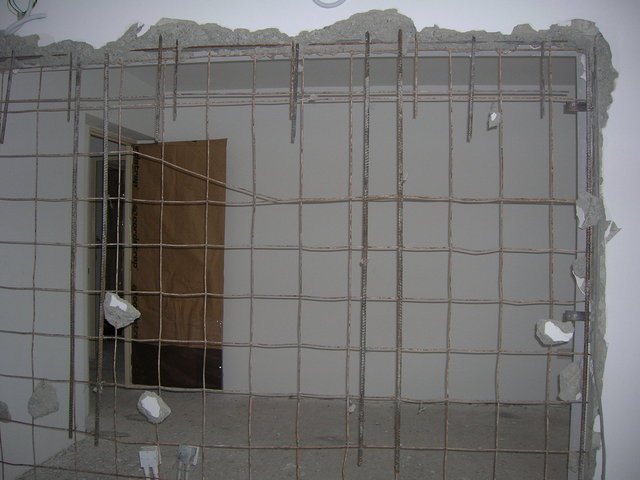
Owner tries to hack a precast wall - only to find steel reinforcements which he has a dilemma whether to cut or not to cut. Cutting it might result in affecting the structural integrity of the building.

Another disadvantage with pre-cast elements is that these components are considered to be inflexible, with respect to changes/renovations. Most people would want to drill holes for wall lamps and so on - which is okay. But for some, they want to hack to allow for additional conduit works and wiring works - which might be a hindrance. If one buys two adjoining units, they may have problems trying to hack down some walls to allow two units to breakthrough.

Friday, July 1, 2011

The Residential Property Market and Sector.

Okay - what I am going to write about next might make you jump off your chair - or rather shocked - or some of you may already sense it already. =) I have been conducting a very thorough research on properties in Malaysia, the property markets - and for those who want to invest in property counters, yes, the property sector as well.

In my opinion, Malaysia's current residential markets look very good, and I would say that the likelihood of a residential property bubble bursting is very low. However, I do think that the larger developers would be seeing fair growth numbers for 2012 as compared to 2011. The rebound from 2008 saw a jump in 2009, a hike in 2010 and a pretty impressive 2011. But as the markets tend to hover and cool down a bit - I believe 2012 will still be a good year, just without the super impressive growth rates.

The Government - through the Economic Transformation Programme (ETP) has been releasing plenty of good news to the property markets. In a way, having new developments and so on are creating and increasing the supply numbers to cool down the high demands, on the other hand, the new developments also create an excitement amongst property players and investors.

I am a firm believer in properties in the Klang Valley region. I believe the Klang Valley properties will continue to be the main driver of the Malaysia property market - and I foresee the highest growth in terms of transaction values and capital appreciation for Klang Valley properties. As what I have seen in private developments and launches, I also noticed that in comparison to 2010 (in particularly 2nd half of 2010), housing launches have slightly slowed down. Assuming units are still being sold at the same rate, that would mean the numbers of unsold residential houses and units will continue to reduce, hence reducing the possibilities of the oversupply situation.

The MRT project under the ETP.

Some analysts and certain groups have said that the ETP projects - in particular with the Greater KL and the MRT will push the property sector further. In my opinion however, there are 2 schools of thought for this. The MRT is expected to be a RM35billion (or more) project, with multiple lines and stations. Yes - I would expect this to enhance/improve property values - however, in my opinion, implementation is always the key to success. In this case, a multi billion dollar project would take time to be implemented and constructed. The project will have its launch event next Friday - to be officiated by the PM himself.

On the Greater Kuala Lumpur part - I would say that there are plenty of good news to flow out from there. Smaller projects such as Damansara City, the redevelopment of Pudu Jail, the developments around Matrade and so on could be launched quite quickly, and actual physical works could hit the grounds as soon as early 2012. The larger projects such as the RRIM land in Sg Buloh, the Sg Besi RMAF land and the KLIFD project at Imbi side will take a much longer time for masterplan proposals, authority submissions and so on before any works can start - which I would look at about... earliest, 2nd half of 2012.

Nonetheless, I would think that the RM150k to RM500k properties are still seeing plenty of investors' attention - and would always remain within the radar. I have seen how properties in Desa ParkCity uptrend from the RM950k/unit to about RM1.2mil/unit - which is a good 26% upside. But I have also seen properties of the lower prices - go from the low RM350k to hit RM500k within the same period - which is an impressive 40+%! Hence, I believe that properties below RM500k are still very much in demand.


The Skim Rumah Pertamaku.

The Government introduced the 'Skim Rumah Pertamaku' - for 1st time home buyers to obtain 100% margin financing for homes below RM220,000. This clearly mean one thing - Affordable is the word, and very likely the word for 2012. To add on to this, the Government is also allowing those earning less than RM6k per month to obtain 90% loan margins with 10% guaranteed deposits for apartments between RM220k-RM300k. However, with the recent rise in building material prices and land costs, I would expect the developers to not focus so much on the RM220k and below units - and instead, on those above RM500k to have better margins.

Alam Idaman apartments, with units from RM240k-RM320k.

Conclusion
In general - while the residential markets look good overall, do be careful for the expensive properties. Properties at about RM200k will be a better bet, with plenty of potential upside. Those RM500k and above would always remain a fair/good bet, but easy disposal of the units will remain a question mark. Do note that the house affordability is very good, with very low interest rates and good options around the markets to scout. Banks are also experiencing better liquidity, and are giving out 30-40 year loan tenures to encourage property purchases.

Tuesday, June 7, 2011

Planning your Property Purchase. =P

Before you jump into buying a property, there are many many many things to consider... and mind you, I would try to summarize here and there, but the many different things to consider... is beyond just the mortgage loans, downpayments and property prices, and of course, the property itself.

Properties in KLCC.

Before making a purchase, do calculate the total expense of the acquisition. This would include stamp duties, mortgage and loan charges, solicitors'/lawyers' fees, maybe insurance and so on. There will be many banks willing to lend you money - so do scout around for the best deal, and select the deals/packages with the appropriate payment amounts and methods.

Traffic congestion in Puchong.

I would always encourage my friends who come to me for advice to scout the local surroundings. Places with convenient transportation and community facilities tend to be able to fetch better rentals - so that is some important things to take note. If you could, you could also go to the local council/municipality to check on various new proposals that may affect the property - OR... for some insider information, maybe you could ask me. =) ...and to check on the prices, I would always encourage personal research and reading. Do check the local area for the recently transacted prices to get the best gauge of its market values to ensure that you are not buying an overpriced property.

Mont Kiara properties.

What else do you need to consider? Do take note of the management fees and so on - and see what it covers. Maintenance fees today can range from the RM0.10psf right up to RM0.50psf, depending on the facilities provided, and depending on location.

Monday, May 23, 2011

The Biggest Errors People Make When Investing in Properties.

I read this article on The Star Property by Michael Tan - on the Three biggest errors people make when investing in properties. He spoke about whether the property was for keeping, or to sell... and then not understanding the mindset of the locals, as well as not getting to know the area well. I somewhat agree with what he said - and I would have some extra points to add on as well.

Condominiums in Penang.

If you ask me - understanding the locals would be amongst the toughest criteria to cover. It is tough to know what the local mindset is; but then again, sometimes the majority of the community can be quite predictable as most of us all are trend followers, arent we? LOL.

If you compare properties with food joints... the lower end properties are like your Chinese kopitiams, where you have your chicken rice, char kuey teow and so on for like RM6-8 and below. The higher end properties are like going to a proper restaurant like Oriental Pavilion or Ah Yat etc, and your meals are averagely RM40++ per person. The medium end... to me, are likened to bak kut teh joints, whereby your meals range from RM20+ per person.


Say you're in the financial district of the city... i.e. KLCC area, or Jalan Raja Chulan for instance. On a bad day for the stock market, the high rollers go for a slightly cheaper meal at the bak kut teh joints, and the bak kut teh goers go to the kopitiams. On a good day, the kopitiam goers upgrade and end up at the bak kut teh shops, whereas the bak kut teh goers end up going for their abalones and shark fin's soup elsewhere. This is the same with properties. In my opinion, if you are going for the medium-end properties, which ranges from RM500k-RM700k, your investment is pretty safe, and there would be plenty of upgraders as well as downgraders - the in-between, the bridge...

SO... the next question is... to keep or to flip?

Like what Mr Michael said, properties for flipping are usually the ones with has the highest capital appreciation in the shortest amount of time. These are usually the landed properties. A simple formula to calculate capital returns would look like this...
The returns will be the total returns you would get. Assuming you achieved 30% returns in 3 years, the next thing you need to do is to divide that to determine your simple returns per year (as compared to compounded returns)

Properties for keeping are the ones that fetch rental returns higher than 6%. These are usually high-rise in nature. Here’s the formula for rental returns...
It is the main criteria to look into before you decide what strategy to adopt before deciding what type of property to invest into. Also, it’s crucial to estimate the returns of investment you desire and the timeline of which to exit. Having exit strategies prior to starting is critical to your success.

Once again, the question comes back to the same item. Rental Returns.

I had mentioned this before - and once again, my stand remains. It has come to my attention that a lot of properties in Klang Valley are not fetching yields of 8% like how they were previously. Here's my reply to that... YOU ARE RIGHT! If you could get a property that fetches you a 8% yield, by all means, dont ever sell it - at least not yet.

Based on the recent research and feedback from various agents, it seems like a lot of properties in Mont Kiara and KL area are fetching yields of 5-6%, which in my honest opinion, is very good.

TTDI Plaza.

Today, Malaysian banks are offering between 2.6% up to about 3% in interest rate returns for Fixed Deposits, a far difference from the 5-6% years ago - which had prompted property returns to about 8%. Today, at 3%, I believe that the proper adjusted property yields should hover at 4-5%. I believe that a lot of people may not agree with me - but I believe this is the scenario that we are facing now in Kuala Lumpur.

If you are hoping for capital gains, then expect your rental returns/yields to drop. =P

Centrestage, a new development in Section 13, PJ.

Tuesday, May 17, 2011

Julie Woon finds harmony in contrast.

Two weeks ago, The Star Property wrote about Julie Woon - a TV personality and model, and also a friend. =) Read all about it below...

Julie Woon knew from the get-go that she would one day make it big in the show business. Upon finishing her study in economics and marketing, Woon concentrated on her career as a TV host, model and actress. Woon, who is currently the host of 8TV Quickie, is perhaps best known for her role as Nina in popular TV series, Blogger Boy. Admittedly, her slender figure and pretty face helped build her career. But the 26-year-old lass would argue that it was her talent, determination and professionalism that played a bigger role in her journey to the top.

Woon’s accomplishment reached another milestone in November 2010 when she bought a 1,826 sq ft condominium unit in Taman Tun Dr.Ismail, Kuala Lumpur. “While scouting for a place that fit my budget and taste, I discovered this three-bedroom condominium unit. It wasn’t long before I made up my mind and bought this unit,” she says.

“The plaster ceiling and the walls were in good condition. I have to say that the previous owner did a good job at maintaining the house,” she enthuses. Extra renovation work commenced in January, and she moved in just a few days before Chinese New Year. Woon invited us to take a peek into her cosy home recently.

Private retreat.

Designed by Silk Pavilion Sdn Bhd, Woon’s spacious condominium unit sees an open-plan layout that combines a minimalist and modern tropical concept. With a modular L-shaped sofa, a triple-layered circular coffee table and a sleek TV console, the living area favours a minimalist concept. Meanwhile, a solid wood dining table and wooden flower decorations in the dining emphasises the elegance of tropical living. Off the hallway to the left is the kitchen. Separating the kitchen and the living-cum-dining is a countertop, which is adorned by metallic mosaic tiles.

“There was a wall separating the kitchen from the living and dining area. We decided to knock down the wall and built a countertop instead to make the entire unit look and feel more spacious,” Woon explains. The bedrooms are located just behind the dining area. Maintaining minimalist concept, Woon keeps the colour palette in the bedrooms to earthy tones such as lilac, brown, white and black.

“My favourite part of the unit is my private bathroom, which dons a black-and-white theme,” she says, adding that she could spend hours relaxing in the bathtub. The spacious master bedroom is blessed with abundant natural light, thanks to windowpanes that open up to Bukit Kiara Hills jogging track.

“I prefer to keep things minimal in my bedroom. There is a modest queen size bed and a floor-to-ceiling railing wardrobe with glass and dark wood accents. And instead of using ceramic tiles in the bedroom, I chose brown laminate flooring for all practical purposes,” Woon notes. As for the other two bedrooms, Woon explains that they have been converted into a guest room and a study room.

Saturday, April 30, 2011

The Property Market - and BIG Factor.

A few days ago, I blogged about Residential Property Prices - How Will It Go? - and of course, the only answer to that question is... UP. There can only be one direction for residential properties here in Klang Valley and that is UP. =) However, I also mentioned one thing... a BIG Factor. Something that all investors need to take note. Something really big to think about...

What is this? It is the YIELD. =P

It has come to my attention that a lot of properties in Klang Valley are not fetching yields of 8% like how they were previously. Here's my reply to that... YOU ARE RIGHT! With the constant rise in property prices and the slower rise in salaries and income, the population today would be struggling to keep up with the rental increases, which has resulted in more stagnant rental movements.

If you could get a property that fetches you a 8% yield, by all means, dont ever sell it - at least not yet. Based on the recent research and feedback from various agents, it seems like a lot of properties in Mont Kiara and KL area are fetching yields of 5-6%, which in my honest opinion, is very good.

Today, Malaysian banks are offering between 2.6% up to about 3% in interest rate returns for Fixed Deposits, a far difference from the 5-6% years ago - which had prompted property returns to about 8%. Today, at 3%, I believe that the proper adjusted property yields should hover at 4-5%. I believe that a lot of people may not agree with me - but I believe this is the scenario that we are facing now in Kuala Lumpur. In order for something to go up, something else need to come down... and in this case, in order for property prices to keep going up, the yields are to come down.

In comparison, the property yields at our neighbouring Singapore are all pretty much all time lows. Smaller apartments and units are fetching yields averaging at 3+ %, and the larger sized ones are much lower, just above 2%. That is not all - this yield does not include the costs of repairs, refurbishments or maintenance charges etc - this is the Gross Yield only.

Further comparisons show that our other South East Asia neighbours Indonesia and Philippines both fetch very good yields of 11% and 7+ % respectively. Malaysia stands at 3rd highest - and that is pretty much about all for this region. Take Hong Kong and China (3+ %) as well as Taiwan (1.7%) for instance - these countries have yields of 3+ % and below - which is probably what we would be looking at for our markets.

Maybe not that low.. but it will still go lower and hover at 4-5% to be the new benchmark yield for Malaysia. (On a brighter note - dont worry, we will never go as low as the yields of 1.2% as seen in Monaco. LOL)

Friday, April 29, 2011

Residential property prices... How will it go?

According to an article in The Edge, Swhengtee International Sdn Bhd founder and president Gavin Tee said that residential property prices would see corrections this year; property prices may soften for certain products in certain locations, having escalated too fast last year.

Some people asked me for my opinion and in my view, I would quite agree with Mr Gavin Tee. However, I dont see the corrections as a major issue when you are making investments in property - especially residential properties. In terms of property appreciations and prices, there is no straight line upwards; it is always a staggard growth - and it just depends on how steep the line is. =)

...and so... the graph/line would look like this. Staggard upward movement. =)

In my view, I believe that the line is correct, but there will be some changes to the line. Let us zoom in a bit and I'll show you the difference... I believe that there will be a minor correction, which would somewhat be forgotten within a short period of time. After the correction is what matters... In the coming 24-30 months, I believe that the property prices would still go upwards, but slow down a bit (not so steep part of the line...).
How the market will behave after the slight correction.

It will still go up, but not as rapidly as before. In my opinion, property prices, in particular to residential ones are expected to go up at least 10% within this year itself, and steadily grow in the months after that. Being in the construction industry, I have additional 'insider information' of this potential rise; for a start, prices of building materials ranging from steel, cement, concrete, timber and so on have all gone up quite a bit. Apart from this, land costs and values have also gone up tremendously. It has come to the time that developers are unable to keep to the previous market prices, hence a natural increase of prices.

Prices of land, especially in matured neighbourhoods such as Petaling Jaya, the KLCC vicinity as well as various areas in Cheras, Kepong and Kota Damansara have been competitively and aggressively snapped up by developers. This sudden competition have resulted in higher land prices, pushing it way beyond the previous 20-25% (of the Gross Development Value) figures. Today, land costs accounts for almost 30%, and in some cases as high as even 40% of GDV values, resulting in a more expensive end product.

The Icon City PJ by Mah Sing

However, despite this, various developers are still developing properties around, and not giving up. I like the recently launched Icon City PJ by Mah Sing - it has quite an innovative design and layout, a futuristic look and importantly, the quantum of the property prices are not extravagantly priced.

As we go forward from here, I believe that the investors and future owners of properties would be looking at new innovations and ideas from the developers; and the developers have to work and think double hard in order to capture the investors' hearts. =)

The Glomac Damansara, by Glomac.

Another project that has caught my eye is the Glomac Damansara. It is a mixed development, with over 1.6 million sq ft of space, comprising shops offices, office blocks, apartments, as well as a Grade A office tower too. I believe this project would sell very well - do bear in mind that the *new* MRT would run near here, and there is a station nearby too.

So, in all, I would like to summarize that... yes, there will be a minor correction of the property prices in the months to come. But dont worry - I believe that the market will pick itself up and stabilize after that.

Just one thing that you need to think about though for investors.... for that, come back to my blog next week and you'll see it. =)

Monday, February 21, 2011

The RM12.2b Klang Valley MRT (Blue Line).

The recent display of the MRT Blue Line (Sungai Buloh - Kajang) is a clear sign of confidence and commitment that Syarikat Prasarana Negara as well as Land Public Transport Commission (SPAD) have in the execution of the construction and completion of this MRT.

The MRT Blue Line - which goes from Sungai Buloh all the way to Kajang, spans about 51km, reduced slightly from before. According to the information shown, 9.5km out of this 51 km will be underground, whereas the balance will be elevated (or ground level I guess). The estimated costs of the Blue Line... if benchmarked at a cost/km of RM240million - would cost about RM 12.24 billion. =) As for the tunnel portion of 9.5km, if benchmarked at RM325million per every km, that portion would be worth about RM3.1billion.

According to press reports, the Government is expected to acquire about 473 plots of land along the MRT route - totalling about 97 hectares of land for the Blue Line. The breakdown of these acquisition is about 103 lots will be acquired between the Sg Buloh and Semantan (Damansara Heights) stretch, 163 lots over the underground section running from Semantan towards the city and 207 lots along Maluri to Kajang town. Existing land usage along the proposed alignment includes residential, commercial, industrial, institutional and recreational uses. Significant stretches, especially segments passing through secondary business hubs and the central business district, are mainly commercial in nature.

My immediate concern here is the timely approval by the local authorities with regards to the stations and alignments. Do note that the MRT Blue Line would go through Majlis Perbandaran Selayang (MPS), a little bit of Majlis Bandar Shah Alam (MBSA), a major part of Majlis Bandar Petaling Jaya (MBPJ), Dewan Bandaraya Kuala Lumpur (DBKL), a little bit of Majlis Perbandaran Ampang Jaya (MPAJ) and of course, Majlis Perbandaran Kajang (MPKj).


Rail designation : Blue Line
Distance : 51km
Total tunneling length : 9.5km
Total elevated length : 41.5km
No. of stations : 35
End-to-end time: 90mins
Train specifications : Driverless 4-car trains
Train capacity : 1,200 people (300x4)
No. of train sets : 58
Service headway : 109 seconds
Maximum speed : 100 km/hr

Some of the information as obtained from online.

The 35 stations along the Blue Line will be positioned near these plots of land. One of the stations will be built near the Warisan Merdeka Development, a project that includes a mammoth controversial 100-storey skyscraper. At least 20 listed property players have parcels of developed and undeveloped land along the Blue Line - some of these to benefit potentially includes MRCB, Berjaya, Sunway City, Guocoland, Malton, YTL, Selangor Properties just to mention a few.

Like what I said before recently, this MRT Blue Line is expected to increase the capital appreciation of its surrounding properties tremendously. Prices of properties are already on the upside due to higher building material prices and so on - and having this MRT just makes it sweeter for the land owners/developers.

By the looks of things and news reports, the tenders for this MRT is to be called - earliest also April 2011. The Government has targetted to commence work in July 2011 - hence I believe the earliest also would be April 2011 to call tender, and awarded by June/July. However, this rush also mean that perhaps only the general earthworks and site preparation works can be started - rather than the major civil works as those would require a more in-depth study on all logistics, traffic diversion as well as land acquisition matters.

With the Blue Line targetted to be completed in 2016 to operate a daily ridership of over 400,000, I trust that the public transport usage would be increased substantially, but I dont have the percentages with me though. 2011-2016 - that is about a 5 year contract period - making the Blue Line a fast-track project. There will be two other MRT lines that will be announced within the next 3 months - being the Circle Line as well as the Green/Red Line.

Some of the key locations within the MRT alignment.

* * * * * * * * * *
I guess this post needs a little disclaimer. Note: This post represents the personal opinion of Eric Yong only (Yes, it is all my personal opinion/thoughts) - and does not represent a recommendation to buy the stocks of the abovementioned public listed companies. Thank you.